
TasP First, PrEP Alongside

TasP First, PrEP Alongside:
Restoring Balance to the HIV Response

By Dr. José M. Zuniga

There is a phrase in the HIV field that has always bothered me: “We cannot treat our way out of the epidemic.” It is repeated so often that it has acquired the status of received wisdom. And, like many slogans, it contains enough truth to make challenging it seem almost heretical. So, allow me some heresy.

When I started in this movement, I developed a reputation as an enfant terrible. Age has apparently not cured the condition. Occasionally, that has been to my detriment, especially when addressing commercial determinants of health. But I remain stubbornly committed to a principle that should not be controversial in public health: data and evidence should prevail, even when they complicate the prevailing narrative. And the evidence tells us that the pendulum may be swinging too far.

For much of the past decade, our HIV strategy rested on a powerful combination: antiretroviral therapy (ART) for people living with HIV, including treatment as prevention (TasP), complemented by pre-exposure prophylaxis (PrEP) and other prevention interventions for people who are HIV-negative. TasP fundamentally altered our understanding of the epidemic because viral suppression accomplishes two extraordinary things simultaneously: it preserves the health and lives of people living with HIV and eliminates the risk of sexual HIV transmission – undetectable = untransmittable, or U=U.

The astonishing public health return on investment that TasP represents should be crystal clear. And it was not an idea conjured from advocacy rhetoric. The scientific trail stretches back nearly two decades:

  • In 2006, Dr. Julio Montaner et al advanced what was then a provocative proposition: expanding access to ART could do more than save the lives of people living with HIV – it could help curb HIV transmission at the population level. The logic was elegantly straightforward. ART suppresses viral replication; lower viral load dramatically reduces infectiousness; therefore, sufficiently broad and sustained treatment coverage could affect the trajectory of the epidemic. What became known as TasP began moving from clinical observation toward population-health strategy.
  • Then came the Swiss Statement in 2008. Drs. Pietro Vernazza, Bernard Hirschel, et al asserted that a person living with HIV who was adherent to effective ART, had sustained viral suppression and had no sexually transmitted infection should not be considered able to sexually transmit HIV. At the time, the statement was controversial – some considered it premature or even dangerous. In retrospect, it was a remarkably important waypoint on the road to what we now know as U=U. It forced the field to confront an implication of effective HIV treatment that many were not yet comfortable stating plainly: successful treatment was also extraordinarily powerful prevention.
  • At almost the same time, Dr. Reuben Granich et al were asking what that insight might mean at population scale. Their landmark 2009 Lancet modeling analysis examined annual voluntary HIV testing followed by immediate ART in a generalized South African epidemic. Under the model’s assumptions, HIV incidence could fall from approximately 20 per 1,000 person-years to less than 1 per 1,000 within a decade. The model was deliberately ambitious and appropriately debated. It was never proof that ART alone could simply eliminate every HIV epidemic. But it demonstrated something enormously important: treatment coverage and viral suppression could be powerful determinants of HIV incidence.

Dr. Montaner became one of the most persistent champions of taking that proposition seriously. By 2011 he was describing TasP’s accumulating evidence as a “double hat-trick,” while work from British Columbia increasingly demonstrated the population-level association between expanded ART coverage, declining community viral load, and reductions in new HIV diagnoses. Subsequent work has continued to argue that sustained ART expansion and viral suppression are fundamental components of epidemic control, a proposition that has only grown more compelling as the evidence for U=U has rendered the preventive benefit of sustained viral suppression scientifically incontrovertible.

Then came empirical evidence from Dr. Myron Cohen et al. HPTN 052 initially demonstrated a 96% reduction in genetically linked HIV transmission among serodifferent couples when ART was started early rather than delayed. HPTN 052’s final results showed a 93% reduction, with no linked transmissions observed when the partner living with HIV was stably virally suppressed. Early treatment also produced direct clinical benefits for the person living with HIV. Modeling based on HPTN 052 subsequently found early ART to be very cost-effective because it increased survival, prevented opportunistic infections and averted HIV transmissions.

The biological premise behind TasP was no longer principally a modeling proposition or an inference from observational data. It had randomized clinical-trial evidence behind it. Importantly, however, recognizing the extraordinary preventive power of ART did not require rejecting new prevention technologies. IAPAC confronted precisely that question in 2012 at our Controlling the HIV Epidemic with Antiretrovirals Summit in London. The summit’s resulting IAPAC Consensus Statement, released at AIDS 2012, embraced both approaches and called for their integration into the HIV response with PrEP as an adjunct to TasP.

That history matters to the argument I am making today. PrEP was never required to displace TasP to prove its value. We understood it as an additional – and potentially transformative – component of combination prevention. Indeed, the 2012 IAPAC Consensus Statement explicitly recognized the importance of examining the cost-effectiveness of combined TasP and PrEP strategies and cautioned that PrEP implementation would be particularly challenging where significant gaps remained in ART coverage among people already eligible for treatment.

More than a decade later, Dr. Montaner and colleagues have made the sequencing even more explicit. Their 2025 formulation is essentially generalized TasP plus focused PrEP: immediate, supported ART following HIV diagnosis, coupled with PrEP targeted to people at substantial risk of acquiring HIV. That is not anti-PrEP. It is not nostalgia for an earlier era of HIV prevention. And it certainly does not argue against long-acting PrEP, which represents an extraordinary scientific achievement that we should make available equitably and at scale.

Yet today, the almost breathless excitement around long-acting PrEP – and particularly the extraordinary potential of agents capable of providing protection for months at a time – risks subtly rearranging our priorities. The enthusiasm is justified. Long-acting PrEP can overcome adherence challenges, reduce the burden of daily pill-taking, expand prevention choice, and potentially transform HIV prevention for millions of people. We should embrace it, scale it and fight ferociously to make it affordable and accessible. But embracing PrEP innovation does not require diminishing the centrality of HIV treatment.

Indeed, earlier modeling comparing TasP with PrEP reached a more nuanced conclusion than today’s either-or rhetoric suggests. Analyses by Dr. Brian Williams et al found that the relative value of the two approaches depends heavily on HIV incidence, PrEP effectiveness, coverage and cost, with TasP favored under many epidemiological conditions and PrEP particularly valuable when concentrated among populations experiencing very high incidence. Their broader modeling suggested that high ART coverage combined with early treatment could be among the most effective and, over time, cost-effective interventions for reducing transmission, while other prevention approaches added important complementary protection.

That sounds less like an argument for choosing TasP over PrEP than an argument for deploying each where it produces the greatest individual and population benefit. The contemporary data make the case even more compelling. According to the Joint United Nations Programme on HIV/AIDS (UNAIDS), approximately 1.2 million people acquired HIV in 2025, while approximately 570,000 people died from AIDS-related illnesses. Since 2010, new HIV acquisitions have declined by 42%, while AIDS-related deaths declined by more than half. Those gains occurred during the era in which ART was massively expanded globally.

And now we are being given a grim natural experiment in what happens when that infrastructure is weakened by the shocks and aftershocks of US policy shifts and budget cuts. UNAIDS modeling estimates that sustained disruption of HIV programs could result in an additional 6 million HIV infections and 4 million AIDS-related deaths by 2029. Those projections encompass disruption to both treatment and prevention, which is precisely the point: the two are interdependent components of the same response.

There is also an uncomfortable human rights dimension to this discussion. We can become so focused on preventing tomorrow’s infections that we inadvertently devalue the lives of people living with HIV today. More than three decades after effective combination ART transformed HIV from an almost invariably fatal disease into a manageable chronic condition, hundreds of thousands of people are still dying annually of AIDS-related causes. Those deaths should offend us every bit as much as every preventable new HIV infection.

A strategy that celebrates declining incidence while tolerating avoidable AIDS-related deaths cannot reasonably be called successful. Nor should “We cannot treat our way out of the epidemic.” become shorthand for moving resources or political attention away from treatment. The phrase may be useful as a warning that treatment alone cannot substitute for prevention. It becomes pernicious when it implies that prevention innovation can substitute for treatment.

The wiser course is not another pendulum swing. It is balance – and disciplined allocation based on evidence. We need rapid diagnosis and immediate ART. We need durable viral suppression and systems capable of finding and re-engaging people who have fallen out of care. We need long-acting ART alongside long-acting PrEP. We need oral PrEP for people who prefer it, condoms for people who use them, harm reduction, STI services, and interventions addressing the social and structural circumstances shaping HIV vulnerability.

And we should increasingly ask a question that HIV politics sometimes discourages us from asking: What combination of interventions produces the greatest health benefit from every dollar available? That calculation must include infections averted. But it must also include deaths averted, years of healthy life gained, opportunistic illnesses prevented, hospitalizations avoided and secondary transmissions prevented through viral suppression. It must account for incidence in the population being served and recognize that the optimal mix of TasP and PrEP in Johannesburg may not be the optimal mix in Atlanta, Berlin, or Mumbai.

Above all, we need prevention and treatment strategies calibrated to epidemiological evidence, human need, cost-effectiveness and individual choice – not to whichever intervention currently commands the greatest enthusiasm. Long-acting PrEP may prove revolutionary. I hope it does. We should ensure that everyone who can benefit has meaningful access to it. But we should be equally impatient about the person living with HIV who remains undiagnosed, the patient who cannot obtain ART, the person lost to follow-up, the individual who has not achieved viral suppression, and the preventable AIDS-related death that becomes another statistic.

Perhaps insisting on this balance makes me unfashionable. I can live with that. I have had practice. God knows Drs. Montaner and Granich have faced their fair share of skepticism and resistance. But what I cannot accept is allowing the pendulum of HIV policy to swing according to fashion rather than evidence. The goal was never simply to prevent HIV infections. It was and remains to prevent suffering, avert deaths, and enable people living with or vulnerable to HIV to live long, healthy lives. We cannot prevent our way out of that obligation any more than we can treat our way out of the epidemic.

Dr. José M. Zuniga is President/CEO of IAPAC, Fast-Track Health, and the Fast-Track Cities Institute.
 

After HIV Exceptionalism

After HIV Exceptionalism:
Are We Protecting the Response or its Institutions?

By Dr. José M. Zuniga

For more than four decades, the global HIV response has rested on an extraordinary proposition: HIV required an extraordinary response. That proposition was correct. HIV exceptionalism mobilized unprecedented resources, created new institutions, transformed relationships between patients and healthcare professionals, elevated community leadership, accelerated scientific discovery, and established the expectation that governments should be held accountable for measurable health outcomes. But within the modern context, does HIV exceptionalism remain the best anchor?

Antiretroviral therapy (ART) transformed HIV from an almost uniformly fatal infection into a manageable chronic condition for those with consistent access to HIV care. U=U transformed our understanding of treatment and challenged decades of stigma. Long-acting pre-exposure prophylaxis (PrEP) and ART now offer possibilities that would have seemed unimaginable during the darkest early years of the HIV epidemic. PEPFAR and the Global Fund changed the trajectory of a pandemic. Activists changed science and medicine themselves.

These achievements must be defended fiercely, particularly at a moment when political and financial commitments to HIV are under enormous pressure. But defending the HIV response cannot mean insisting that every institution, funding mechanism, program, and organizational structure created during the past four decades must exist indefinitely in its current form. That distinction is becoming increasingly important as we navigate the exigencies of the current time we are all struggling to adjust to and labor within.

For decades, we have spent considerable time asking how to sustain the HIV response. Responding to that million (billion?) dollar question has come to take on an added urgency over the past year and a half. But perhaps we also need to ask a more uncomfortable question: Are we trying to sustain the extraordinary outcomes of the HIV response even as we acknowledge they were inequitable or the institutions of the HIV response? They are not necessarily the same thing, as important as they both are to the lives of people living with and vulnerable to HIV.

As I describe in my new book, “Aftershocks, Trump 2.0, Public Health, and Our Better Angels,” HIV exceptionalism was not merely a funding strategy; it became an ecosystem. Around the HIV response emerged dedicated government programs, multilateral institutions, financing mechanisms, NGOs, community organizations, clinics, conferences, journals, professional societies, surveillance systems, advocacy networks, and entire professional careers. That infrastructure accomplished extraordinary things.

But institutions also develop an understandable instinct for self-preservation. Organizations seek renewed funding. Programs defend their jurisdictions. Conferences need attendees. Bureaucracies protect mandates. Professional communities develop identities around particular diseases and populations. None of this requires bad intentions. It is simply what institutions do. The danger arises when we begin confusing the preservation of institutions with the preservation of the mission for which those institutions were created.

Moreover, the limitations of disease-specific architecture become particularly apparent when we consider the lives of people we serve. A person living with HIV, particularly if they are aging with HIV, may simultaneously be managing hypertension, obesity, diabetes, cardiovascular disease, depression, cancer risk, substance use, housing instability, or the consequences of aging. Someone seeking PrEP may need sexual healthcare, mental health services, contraception, vaccination, or treatment for another sexually transmitted infection.

Yet healthcare financing and delivery frequently require people to navigate separate systems created around diseases rather than lives. Our architecture is vertical and sometimes horizontal. Human beings are diagonal, horizontal, and vertical. The conventional answer has been “integration,” or simply adding hypertension screening to HIV clinics, incorporating mental health services, screening for cancers, or connecting patients to other programs. All of this is worthwhile. But integration may be too timid an ambition.

Instead of continually asking how additional services can be integrated into HIV programs, perhaps we should ask what healthcare would look like if the person – not HIV or any other disease – became the organizing principle of the healthcare system itself. Under that scenario, what would we build today given the opportunity to hit a reset button and build back better? Whole-person care is an approach IAPAC has integrated into our work, including our recent Continuum 2026 conference that highlighted cardiometabolic health in addition to HIV prevention and treatment.

Imagine that we could design the HIV response from scratch (or close to scratch), as we may well have to do if we continue to experience more disruptions. We would be designing it in an era of highly effective ART, U=U, long-acting PrEP and ART, artificial intelligence, sophisticated data systems, precision medicine, rapidly aging populations, accelerating urbanization, climate instability, and constrained public financing. And we would be doing so by recognizing individual health and life circumstances that are each distinct threads that weave together the human experience.

Should we take the easy road and reproduce the architecture developed during the emergency years of AIDS? Probably not. We might build systems capable of more equitably preventing HIV, rapidly diagnosing it, delivering PrEP and ART through multiple channels, using real-time data to identify gaps, and addressing people’s broader health needs throughout their lives. Ours would be a “no wrong door” approach that organizes care around people rather than diseases, recognizing that every encounter with the health system is an opportunity to address the interconnected health and life circumstances that shape well-being.

To be clear, this is not an argument for dismantling HIV infrastructure or reducing HIV investments any further than they have already been recently dismantled or chronically underfunded. Doing either has already had a disastrous impact on millions of people who depend upon these systems, and the epidemic remains far from over with global and national target deadlines more than likely to be missed at this point. The argument instead is one for something more ambitious: turning HIV infrastructure into health infrastructure.

In the work we are advancing through our sister organization, Fast-Track Health, it has become abundantly clear looking through the lens of other health responses that the HIV response possesses capabilities that much of public health still struggles to achieve: measurable targets, sophisticated surveillance, community accountability, differentiated service delivery, implementation science, global procurement mechanisms, political advocacy, and an extraordinary capacity to translate scientific advances into population-level impact. Why should those capabilities remain confined to HIV?

HIV clinics could increasingly become comprehensive health centers. HIV data platforms could evolve into broader health intelligence systems collecting broader data sets. Community-based organizations could expand their mandates to whole-person care while retaining the trust they have spent decades building. The implementation science developed around HIV could accelerate responses to cardiovascular disease, cancer, obesity, viral hepatitis, mental health conditions, climate-related health threats, and future infectious diseases. HIV would remain a priority; it simply would no longer have to remain a silo.

Can we plan for our own success? Yes, we have gifted, dedicated, and strategic leaders in our midst – some veterans and others young and emerging – who can lead the HIV response into its next iteration. But I submit there is an even harder question: Can institutions devoted to public health imagine a future in which they themselves must fundamentally change? Every organization, including ours, talks about sustainability. Far fewer talk about obsolescence. Yet institutional permanence should never be a public health outcome.

That conversation is not evidence that we have failed or succeeded completely. It is evidence that we intend to succeed and wish to rally our better selves, armed with the vim and vigor that characterizes our movement, to leave no one behind when the headwinds we face are so incredibly strong. Perhaps the ultimate objective is not to preserve HIV exceptionalism forever. Perhaps our collective objective is to preserve what was exceptional about the HIV response: its urgency, scientific ambition, community leadership, accountability, solidarity, and refusal to accept preventable death.

The HIV movement has spent four decades repeatedly and consistently demonstrating that health systems can work differently. US Food and Drug Administration (FDA) reforms alone are proof-positive. Our next responsibility is ensuring that lesson does not remain trapped inside the inflexible unchanging architecture of one disease. Making HIV medically ordinary without ever allowing injustice to become ordinary  would not mark the end of the HIV response. In fact, it might represent its greatest achievement and our generation’s strategic contribution.

Dr. José M. Zuniga is President/CEO of IAPAC, Fast-Track Health, and the Fast-Track Cities Institute.
 

IAPAC President/CEO Publishes “Aftershocks”

IAPAC President/CEO Dr. José M. Zuniga Publishes New Book,

“Aftershocks: Trump 2.0, Public Health, and Our Better Angels”

New Book Examines the Systematic Dismantling of Public Health Institutions
and Calls for Collective Action to Rebuild a Stronger, More Equitable System


Washington, DC, USA (August 3, 2026) — The International Association of Providers of AIDS Care (IAPAC) today announced the publication of “Aftershocks: Trump 2.0, Public Health, and Our Better Angels,” a new book by IAPAC President/CEO Dr. José M. Zuniga examining the profound disruption of public health systems and the urgent need for a coordinated movement to defend and ultimately rebuild them.

Drawing on nearly four decades of experience in HIV, global health, and public health policy, Dr. Zuniga chronicles the consequences of federal actions that have weakened scientific institutions, disrupted lifesaving programs, displaced skilled public servants, erased vital health information, and placed already marginalized communities at greater risk. The book situates these developments within a broader struggle over whether public health will remain grounded in science, human rights, equity, and the common good.

Although unflinching in its assessment of the damage inflicted during the second Trump administration, “Aftershocks” rejects despair. Dr. Zuniga argues that defending existing institutions and programs is essential but insufficient. Restoring an imperfect preexisting system cannot be the limits of the public health community’s ambition. Instead, he argues that the present crisis must become a catalyst for designing a more resilient, accountable, equitable, and people-centered public health future.

“My new book is both a warning and a call to action,” said Dr. Zuniga. “We must defend the people, programs, institutions, and scientific principles that are under attack, but resilience alone cannot become our long-term strategy. This moment also requires us to confront the inequities and structural weaknesses that existed long before Trump 2.0 and to organize around a bold vision for rebuilding public health. We cannot surrender to despair or retreat into nostalgia; we must summon our better angels and begin constructing a future worthy of the public’s trust.”

The book also introduces what he labels “Horizons 2028,” an organizing framework intended to move public health advocates from resistance to reconstruction. Looking towards the consequential 2028 election, Horizons 2028 calls upon public health professionals, scientists, community leaders, policymakers, journalists, advocates, and people with lived experience to develop a shared agenda that can be translated into a mandate for rebuilding.

The book carries particular relevance for the HIV response. Decades of scientific progress – including effective antiretroviral therapy (ART), treatment as prevention, U=U, and pre-exposure prophylaxis (PrEP) – have demonstrated what is possible when research, political commitment, community leadership, and sustained investment converge. Yet unequal access to these advances continues to perpetuate what Dr. Zuniga describes as “innovation apartheid,” while funding disruptions and policy reversals threaten hard-won gains.

For IAPAC, the book’s central message aligns with a longstanding commitment to evidence-informed, equity-based, and person-centered health systems. It also reinforces the organization’s determination to defend scientific integrity, protect access to lifesaving services, and ensure that public health policies uphold the dignity and human rights of every person.

“Public health has always been about more than controlling disease,” Dr. Zuniga added. “It is a collective promise that where people live, who they are, whom they love, or how much they earn will not determine whether they can live healthy and dignified lives. That promise is being tested. Our response must be organized, courageous, and ambitious enough not merely to recover what has been lost, but to build what should have existed all along.”

“Aftershocks: Trump 2.0, Public Health, and Our Better Angels” is available through Amazon, Barnes & Noble, and other booksellers. A percentage of book sales proceeds will be donated to IAPAC, the Fast-Track Cities Institute, and Fast-Track Health.

#  #  #


About the Author

Dr. José M. Zuniga is President/CEO of the IAPAC, the Fast-Track Cities Institute, and Fast-Track Health. For nearly four decades, he has worked at the intersection of HIV, public health, urban health, human rights, and health policy. He was Chair of the IAPAC-Lancet HIV Commission on the Future of Urban HIV Responses and is Editor-in-Chief of the Journal of Fast-Track Health. His 4th edited Oxford University Press volume, “AIDS at a Crossroads,” will be released next month. His work has focused on translating scientific evidence into policies and programs that improve health outcomes, reduce inequities, and strengthen community-centered health systems.


About IAPAC

IAPAC is a global medical association representing more than 30,000 clinicians and allied health professionals working to end the HIV pandemic and address its related health challenges. Since 1985, IAPAC has advanced evidence-informed, equity-based, and person-centered approaches to HIV prevention, testing, treatment, and long-term care. IAPAC also provides technical leadership to the global 600+ Fast-Track Cities network and works with governments, health systems, communities, and other partners to improve health and quality of life for people living with and affected by HIV.

AIDS 2026 and the Urgency of Now

AIDS 2026 and the Urgency of Now:
Defending Progress While Building What Comes Next

By Dr. José M. Zuniga

As the global HIV community convenes this week for AIDS 2026 in Rio de Janeiro, it does so at a moment that demands both honesty and resolve. International AIDS conferences are opportunities to memorialize achievements, reaffirm commitments, and look towards the future. Those moments matter today just as much as they did when researchers, clinicians, and activists convened in Atlanta for the first international AIDS conference in 1985. But AIDS 2026 also presents an opportunity for us to engage in an unflinching assessment of where we stand.

The truth is that the global HIV response enters this conference from an imperfect baseline. Long before the current wave of political, financial, and ideological attacks on public health, persistent inequities continued to shape the epidemic. Millions of people still lacked access to prevention, treatment, and care. Even as remarkable scientific breakthroughs transform what is possible, far too many people and countries remain excluded from their benefits, creating what can only be described as an “innovation apartheid.” Stigma and discrimination undermined health-seeking behavior. Criminalization, gender inequality, and structural racism remained powerful drivers of vulnerability.

Extraordinary progress had been made, but the work was far from finished. Today, those unfinished challenges are being compounded by new ones. Across multiple countries, investments in HIV programs are under pressure. Scientific expertise is increasingly questioned. Public health institutions are being weakened. Community organizations are being forced to do more with less. Human rights protections that have long served as pillars of the HIV response are being challenged. Hard-won gains that once seemed secure now require active defense.

None of this diminishes the remarkable work being done every day by clinicians, researchers, advocates, public health practitioners, policymakers, and communities. Quite the opposite. The continuity of HIV services that has been maintained in so many settings despite extraordinary headwinds reflects resilience, ingenuity, and commitment of the highest order. Countless individuals have refused to allow political uncertainty or financial instability to interrupt care for people living with or vulnerable to HIV.

That work deserves recognition. But resilience alone cannot become the long-term strategy. The urgency of this moment requires the HIV community think both defensively and offensively as I layout in my new book, “Aftershocks: Trump 2.0, Public Health, and Our Better Angels.” It is not enough to preserve what remains of the HIV response; we must simultaneously defend the scientific, public health, and human rights foundations that made progress possible while boldly advancing new strategies that are more resilient, equitable, and prepared for the challenges ahead.

Defensively, the priority must be protecting what generations before us built. That means safeguarding evidence-based prevention and treatment programs, defending scientific integrity, preserving surveillance systems, supporting frontline providers, protecting community-led organizations, and insisting that human rights remain central to every HIV response. It also means documenting the consequences of policy decisions that undermine health so future generations understand exactly what was lost—and why.

The HIV response must also move offensively by reimagining what its next era can become. The future cannot simply be about restoring what existed before recent disruptions. If the ambition is limited to rebuilding yesterday’s systems, there is a risk of recreating many of the vulnerabilities that left those systems exposed in the first place. Instead, this moment should be seized to strengthen integration across health conditions, responsibly leverage advances in digital health and artificial intelligence, build more resilient municipal health systems, deepen partnerships between governments and communities, and create financing models that are more sustainable and less vulnerable to political cycles.

Cities remain especially important in this effort. Urban areas continue to shoulder a disproportionate share of the global HIV burden, but they also possess unique strengths: proximity to communities, operational flexibility, data-informed governance, and the ability to innovate rapidly. Municipal leadership has repeatedly demonstrated that local action can sustain momentum even when national environments become more difficult. As a Fast-Track City, Rio de Janeiro therefore provides an appropriate backdrop for these conversations. The city reminds us that progress has never been inevitable. It has always depended on courageous leadership, scientific excellence, community activism, and sustained solidarity. Those qualities remain the HIV response’s greatest assets.

As delegates exchange research findings, debate policy, and forge new collaborations throughout AIDS 2026, there is value in resisting two equally unhelpful impulses. One is despair – the belief that recent setbacks have erased decades of progress. The other is complacency – the assumption that incremental improvements alone will carry the response to its shared goals. Neither reflects reality. The HIV response has always succeeded because it adapted faster than the challenges before it. It combined science with social justice. It transformed patients into partners, communities into leaders, and local innovation into global policy. That same spirit is needed now. The urgency of this moment is not a call for panic. It is a call for purpose.

History will judge this period not only by the obstacles placed before the HIV response, but by how the global community responded to them. If what must be protected is defended while what must come next is built with equal determination, future generations may look back on this difficult chapter not as the beginning of decline, but as the moment the HIV response renewed itself with greater resilience, broader partnerships, and an even stronger commitment to health equity. That work cannot wait. The urgency is now.

Dr. José M. Zuniga is President/CEO of IAPAC, Fast-Track Health, and the Fast-Track Cities Institute.
 

Los Angeles Joins Fast-Track Cities

IAPAC Welcomes the City of Los Angeles, CA,
to the Global Fast-Track Cities Network

Washington, DC, USA (July 7, 2026) — The City of Los Angeles has joined the global Fast-Track Cities network, becoming part of the world’s largest urban health initiative dedicated to advancing equitable, data-driven, and person-centered responses to HIV, tuberculosis (TB), viral hepatitis, and other pressing public health challenges. By joining more than 600 cities and municipalities worldwide, Los Angeles affirms its commitment to accelerating progress towards healthier, more resilient, and more inclusive communities through collaboration, innovation, and data-informed action.

As the second largest US city by population, Los Angeles is home to one of the largest and most diverse urban populations in the United States, but it also faces challenges similar to most US cities to close gaps across its HIV prevention and treatment continua. Participation in the Fast-Track Cities network will strengthen opportunities for collaboration with peer cities, expand access to technical assistance, and support the use of strategic data to improve health outcomes while reducing longstanding inequities affecting vulnerable populations.

“We applaud Mayor Karen Bass and the Los Angeles City Council for demonstrating a commitment to health equity that can drive meaningful progress across HIV and other health priorities,” said Dr. José M. Zuniga, President/CEO of IAPAC, Fast-Track Health, and the Fast-Track Cities Institute. “We look forward to working alongside city leaders, county public health department officials, clinicians, researchers, and community-based organizations to accelerate integrated, person-centered approaches that improve the lives of Los Angelenos.”

“Since the establishment of the AIDS Coordinator’s Office in 1989, the City of Los Angeles has maintained a leadership role in directly addressing the HIV crisis through the development of programs and policies designed to support individuals living with HIV and prevent new infections,” said Ricky Rosales, the current City of Los Angeles AIDS Coordinator. “The City is pleased to join the Fast-Track Cities initiative, participating in a global collaborative effort to exchange knowledge, receive technical and strategic support, and share local achievements with an international community to optimize resources toward the collective objective of eliminating HIV.”

Launched in 2014, the Fast-Track Cities network supports cities and municipalities in strengthening their responses to HIV, TB, viral hepatitis, and increasingly interconnected communicable and non-communicable diseases, while promoting healthier, more resilient urban environments. Through political leadership, community engagement, implementation science, and continuous performance monitoring, participating cities and municipalities exchange best practices and scale proven interventions that advance health equity and sustainable urban development.

The addition of Los Angeles further strengthens the Fast-Track Cities network across the United States and globally, reinforcing the critical role of municipal leadership in achieving the health-related Sustainable Development Goals (SDGs) and US Ending the HIV Epidemic objectives. In the United States, Los Angeles now joins more than 55 cities and municipalities that have joined the initiative since 2015, including Atlanta-Fulton County, Baltimore, Chicago, Denver, Houston, Miami-Dade County, New York City, Phoenix, San Francisco, and Washington, DC.

Click here to access a a list of Fast-Track Cities stratified by region.

PrEP for All – Scaling Innovation

PrEP for All:
Scaling Long-Acting Innovation to Bend the Curve

By Dr. José M. Zuniga

The Kaplan-Reiter Memorial Lecture at Continuum 2026 in San Juan, PR, was masterfully delivered by Dr. Linda-Gail Bekker, Chief Executive Officer of the Desmond Tutu Health Foundation and one of the world’s leading voices in HIV prevention. Her lecture offered both a celebration of how far the HIV response has come and a call to action regarding the work that remains.

The memorial lecture paid tribute to the memory of Drs. Andy Kaplan and Gary Reiter, whose lives and legacies continue to inspire compassion, care, and advocacy within the HIV community. Dr. Bekker framed their contributions within the broader history of the epidemic – a history marked by extraordinary loss, remarkable scientific achievement, and relentless activism that shaped the HIV response.

Reflecting on the epidemic’s early years, she reminded conference attendees that more than 86 million people have acquired HIV since the beginning of the pandemic. The trajectory of HIV has been shaped not only by biomedical advances but also by the determination of communities that demanded action when governments, institutions, and healthcare systems often failed to respond.

Dr. Bekker highlighted the pivotal role of activists, advocates, and treatment access movements around the world. Their efforts helped transform HIV from a death sentence into a manageable chronic condition for millions of people. The development and global scale-up of antiretroviral therapy (ART) stands as one of the greatest public health achievements of modern times. Today, more than 31 million people are on ART, millions of lives have been saved, and AIDS-related deaths have declined dramatically.

Despite ART advances and the success of U=U, the world remains off track in preventing new HIV infections. Approximately 1.3 million people acquired HIV in 2024, which is the equivalent to more than 3,500 new infections every day. Young women in sub-Saharan Africa continue to face disproportionate risk, while key populations remain heavily affected across every region of the world. For Dr. Bekker, these statistics point to an unavoidable conclusion: the next phase of the HIV response must be driven by a primary prevention revolution.

While daily oral pre-exposure prophylaxis (PrEP) has transformed HIV prevention, it has not yet been sufficient to achieve the scale or persistence required to end the epidemic as an adjunct to treatment as prevention (TasP). Many individuals face challenges related to adherence, stigma, privacy concerns, and access to services. Prevention options that work well for one person may not work for another. The future therefore lies not in a single intervention, but in expanding prevention choice.

A central focus of the memorial lecture was the emergence of long-acting HIV prevention technologies. Dr. Bekker reviewed the growing evidence supporting long-acting PrEP. She noted that clinical trial results have demonstrated unprecedented levels of efficacy. These findings have generated considerable excitement within the global HIV community and offer the possibility of dramatically expanding prevention coverage among populations for whom daily medication presents barriers.

Importantly, Dr. Bekker stressed that scientific innovation alone will not end the epidemic. She repeatedly returned to the concepts of access, equity, and choice. Prevention technologies must be delivered through community-centered systems that recognize the diverse realities of people’s lives. Services should be integrated, tailored, and responsive to individual needs rather than expecting individuals to adapt to rigid healthcare structures.

Drawing on implementation science from South Africa and other settings, she highlighted the effectiveness of models that bundle HIV prevention with sexual and reproductive healthcare, mental health services, peer navigation, gender-affirming care, social support, and other essential services. Such approaches not only improve uptake of prevention tools but also help sustain engagement over time.

Community leadership emerged as another central theme. Dr. Bekker emphasized that communities are not merely recipients of HIV services; they are architects of successful responses. From the earliest days of the epidemic to today’s efforts to expand PrEP access, community organizations have played an indispensable role in building trust, reaching marginalized populations, reducing stigma, and advocating for equitable policies.

At the same time, she warned that recent funding disruptions, growing political hostility towards vulnerable populations, and reductions in international development assistance threaten decades of progress. She rightly indicated that scientific breakthroughs cannot achieve their full impact if access remains constrained by cost, policy barriers, discrimination, or insufficient investment.

Dr. Bekker’s memorial lecture concluded with a powerful challenge: advocate, agitate, act, and accelerate. There is no time to lose if the global community hopes to achieve HIV control by 2030. The tools exist. The science is stronger than ever. The question is whether the world will mobilize the political will and resources necessary to ensure that innovation reaches everyone who needs it everywhere. Time will tell…

Editorial Note from Dr. José M. Zuniga

Throughout the history of the HIV response, scientific breakthroughs have achieved their greatest impact only when accompanied by strong advocacy, community mobilization, and a commitment to equity. Long-acting HIV prevention technologies have the potential to transform the epidemic’s trajectory, but only if they are accessible to all who could benefit from them.

As funding uncertainties grow and health inequities widen, advocacy around access becomes more important – not less. We must work collectively to ensure affordable pricing, accelerate regulatory approvals, strengthen procurement mechanisms, support community-led delivery models, and protect the investments necessary to scale prevention.

The promise of long-acting PrEP is extraordinary. Realizing that promise will require the same courage, persistence, and activism that helped secure access to HIV treatment for millions of people around the world. The future of HIV prevention will not be determined solely by what science makes possible, but by whether we are willing to ensure that those possibilities are available to everyone.

Dr. José M. Zuniga is President/CEO of IAPAC, Fast-Track Health, and the Fast-Track Cities Institute.

Whole-Person Health and HIV Research

Whole-Person Health and HIV Research:
Continuum 2026 Keynote Lays Out OAR Vision

By Dr. José M. Zuniga

Remarkable advances in prevention, treatment, and care have transformed HIV into a manageable chronic condition for millions of people. The challenges facing individuals aging with HIV thus demand a broader and more integrated response. At Continuum 2026, Dr. Geri R. Donenberg, Associate Director for AIDS Research and Director of the National Institutes of Health (NIH) Office of AIDS Research (OAR), delivered a compelling keynote address outlining the future of HIV research through the lens of whole-person health.

Her message was clear: HIV care and research can no longer focus solely on viral suppression. To ensure optimal health outcomes, we must address the full spectrum of factors that influence the lives of people living with HIV, including the growing burden of aging-related conditions, mental health challenges, social determinants of health, and the cumulative effects of multiple co-occurring diseases that shape long-term well-being. She urged a shift from a disease-centered model to a person-centered approach that recognizes individuals as more than their HIV diagnosis and prioritizes quality of life alongside clinical success.

HIV remains a significant public health challenge. Approximately 39,000 new diagnoses continue to be reported annually in the United States, underscoring the need to sustain and strengthen prevention efforts. And nearly 1.1 million people are living with HIV in the United States, and most are now age 50 years or older. Dr. Donenberg acknowledged these demographic shifts reflect the extraordinary success of antiretroviral therapy (ART), but noted they also signal a new phase of the epidemic characterized by aging, chronic disease management, and quality of life considerations.

Dr. Donenberg emphasized the importance of adopting a whole-person health framework that considers physical, mental, emotional, social, and environmental dimensions of well-being across the lifespan. For people living with HIV, this perspective is particularly important given the complex interplay between HIV, aging, and multiple co-occurring conditions, as well as the social and structural factors that influence access to care, treatment adherence, and overall quality of life. This perspective also underscores the need for integrated models of care that are responsive to the realities of daily life.

Her keynote address highlighted what some researchers have termed the “gray tsunami” of HIV. As people with HIV live longer, and as older adults increasingly represent the majority of those receiving HIV care, they increasingly face challenges associated with aging, including frailty, functional decline, neurocognitive changes, polypharmacy, social isolation, and the management of multiple chronic conditions. These realities require healthcare systems to evolve beyond traditional HIV care models toward more integrated and multidisciplinary approaches.

Women aging with HIV face additional complexities. Research Dr. Donenberg presented during the keynote address underscored higher burdens of co-occurring conditions, differences in immune response and antiretroviral drug metabolism, reproductive health considerations, and the earlier onset and greater severity of menopause-related symptoms. These findings reinforce the need for sex-specific and gender-responsive research and clinical care. They also highlight the importance of ensuring that women are adequately represented in HIV research to better address their unique biological, clinical, and psychosocial needs across the lifespan.

Co-occurring conditions represent one of the most significant drivers of morbidity among people living with HIV. Cardiovascular disease, diabetes, kidney and liver disease, osteoporosis, neurocognitive disorders, and certain cancers occur at elevated rates in this population and have substantial impacts on quality of life. Recognizing this reality, and the growing number of people aging with HIV who are managing multiple chronic conditions simultaneously, she indicated the NIH has dedicated approximately 20% of its HIV research portfolio to studying co-occurring conditions and their interaction with HIV.

Quality of life also emerged as a central theme throughout her presentation. Viral suppression remains a critical goal, but it is no longer sufficient as the sole measure of success. Individuals living with HIV increasingly seek not only longer lives but also healthier, more fulfilling lives. Quality of life encompasses physical health, mental well-being, social relationships, independence, housing stability, and overall life satisfaction. Dr. Donenberg emphasized that these person-centered outcomes should be considered alongside traditional clinical indicators when evaluating the effectiveness of HIV care and treatment programs.

Encouragingly, recent data show improvements in several quality-of-life indicators, including housing stability, employment, food security, and HIV-related stigma. However, unmet mental health needs have worsened, highlighting an area Dr. Donenberg says requires urgent attention. Mental health remains both a determinant and an outcome of successful HIV care and must be integrated more fully into clinical and public health responses. Addressing mental health challenges will be essential to sustaining treatment engagement, improving quality of life, and supporting healthy aging among people living with HIV.

The OAR plays a critical role in coordinating the federal HIV research agenda. In fiscal year 2025 alone, NIH invested approximately $3.29 billion in HIV research across more than 3,800 awards spanning over 20 NIH institutes and centers. This coordinated investment supports research across the continuum of prevention, treatment, cure, implementation science, aging, women’s health, and co-occurring conditions. Such a broad and coordinated portfolio reflects the complexity of today’s HIV epidemic and the need for multidisciplinary solutions that address both biomedical and broader health challenges.

Dr. Donenberg’s keynote address concluded with a call for greater coordination across agencies, disciplines, and healthcare systems. Integrating geriatric expertise into HIV care, expanding aging-related screening, strengthening multidisciplinary care teams, and promoting provider cross-training are among the strategies needed to meet the needs of an aging HIV population. She emphasized that success will require sustained collaboration among researchers, clinicians, public health practitioners, community organizations, and policymakers to deliver truly integrated, whole-person care.

Dr. José M. Zuniga is President/CEO of IAPAC and the Fast-Track Cities Institute.

Click here to access Dr. Donenberg’s keynote address. Suggested citation:

Donenberg, G. R. Implementation Science: Aligning Priorities: HIV Implementation Science in Action. Keynote Address. Continuum 2026. June 22-24, 2026. San Juan, PR.

AAHIVM et al v HHS

IAPAC Joins AAHIVM and HIVMA in Lambda Legal Suit
Against Trump Administration on Gender-Affirming Care

Statement by Dr. José M. Zuniga

The International Association of Providers of AIDS Care (IAPAC) joined the AAHIVM et al. v HHS lawsuit because the Ryan White HIV/AIDS Program has, for more than three decades, been a model of evidence-based, patient-centered, comprehensive care for people living with HIV. The recent federal restrictions targeting transgender individuals living with HIV undermine the very principles that have made the program one of the most successful public health interventions in U.S. history.

Transgender people are disproportionately affected by HIV and often face significant barriers to accessing healthcare, including stigma, discrimination, poverty, housing instability, and inadequate insurance coverage. The Ryan White HIV/AIDS Program was designed to address these realities through an integrated model of care that empowers clinicians to respond to the full spectrum of patient needs. Restricting access to medically necessary gender-affirming care and limiting providers’ ability to acknowledge and respect the identities of their patients is inconsistent with both sound clinical practice and the program’s intent.

IAPAC believes that healthcare decisions should be guided by the best available scientific evidence, clinical judgment, and the needs of individual patients – not by political ideology. Decades of experience have demonstrated that people living with HIV achieve better health outcomes when care is comprehensive, affirming, and tailored to their circumstances. Policies that create barriers to care threaten engagement in treatment, adherence to antiretroviral therapy, and viral suppression – the very outcomes the Ryan White HIV/AIDS Program was established to achieve.

Our participation in this lawsuit reflects our longstanding commitment to health equity, human dignity, and the right of all people living with HIV to receive medically appropriate, evidence-based care without discrimination. We will continue to stand with our clinical partners, community advocates, and patients to defend the integrity of the Ryan White HIV/AIDS Program and ensure that no person living with HIV is denied care because of their gender identity.

Click here to access a Lambda Legal press release about AAHIVM et al v HHS.

Dr. José M. Zuniga is President/CEO of IAPAC, Fast-Track Cities Institute, and Fast-Track Health.

NEWS ALERT

New Data Brief Signals Strain on US HIV Response as

Service Disruptions Worsen for Vulnerable Populations

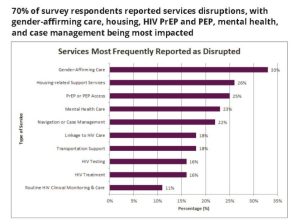
Washington, DC (April 14, 2026) – The International Association of Providers of AIDS Care (IAPAC), in collaboration with fellow members of the Emergency HIV Clinical Response Task Force, today released a new data brief warning of disruptions to HIV prevention, treatment, and care services across the United States. The findings, based on a national survey of 383 frontline providers across 47 states and Puerto Rico, reveal a system under mounting pressure from funding instability, workforce strain, and deepening social and economic vulnerabilities.

The data brief, HIV Response in U.S. Experiencing Renewed Strain,” documents that 61% of providers reported at least one HIV service disruption, while 68% reported operational changes such as staffing reductions, service cutbacks, and program closures. These disruptions span the full continuum of care, including HIV testing, mental health services, and access to long-acting injectable antiretroviral therapy (ART) and pre-exposure prophylaxis (PrEP).

Equally concerning are the disproportionate impacts on populations already facing structural inequities. Transgender individuals, migrants and undocumented persons, and people experiencing homelessness were identified as among the most affected groups, but impacts were reported across a wide range of groups, including Latinx/Hispanic, Black/African-American, and lesbian, gay bisexual, and queer (LGBQ) individuals.

“These data confirm what frontline providers have been warning for months: the US HIV response is entering a period of dangerous instability,” said Dr. José M. Zuniga, President/CEO of IAPAC. “We are witnessing the convergence of policy decisions, funding contractions, and social determinants of health that are actively undermining decades of progress. When patients lose housing, insurance, or access to care, HIV does not wait and neither can we.”

The survey also highlights the growing role of social determinants of health in disrupting care continuity. Providers reported that housing instability (65%), food insecurity (62%), and loss of insurance coverage (61%) are among the leading barriers preventing patients from remaining engaged in care. Fear of immigration enforcement was cited as a major factor driving disengagement among migrant populations, with some providers reporting severe consequences, including delayed care leading to death.

In addition, the survey data underscore mounting challenges related to medication access. Insurance lapses, coverage denials, and rising out-of-pocket costs are increasingly preventing people living with and vulnerable to HIV acquisition from accessing life-saving HIV prevention, treatment, and supportive services. In that regard, Dr. Zuniga added that these access barriers are not abstract policy concerns but active risk multipliers, creating the precise conditions under which localized HIV transmission clusters can rapidly escalate into sustained outbreaks if left unaddressed.

“Small HIV transmission clusters do not remain small in the absence of timely intervention; they expand, accelerate, and become exponentially more difficult to contain,” said Dr. Zuniga. “What we are witnessing in the current Bangor, Maine, HIV outbreak is a warning that if we fail to act with urgency to restore access, stabilize services, and re-engage communities in care, we risk allowing preventable clusters of HIV transmission to evolve into widespread outbreaks across multiple jurisdictions.”

The Emergency HIV Clinical Response Task Force – comprising the five leading US-based HIV medical and nursing associations – launched this survey effort to monitor the real-time impacts of evolving federal and state policy changes on HIV service delivery. The first fielding of the survey took place in July 2025, and a second follow-up survey was fielded in November-December 2025, and its data are reported in the current data brief capture the breadth of disruptions and impacts experienced from July to October 2025.

Here is a link to the HIV Response in U.S. Experiencing Renewed Strain” data brief.

 #  #  #

About IAPAC: The International Association of Providers of AIDS Care is a global association representing healthcare professionals and allied organizations working to improve the quality of and access to HIV prevention, care, and treatment services worldwide. IAPAC supports the global Fast-Track Cities initiative, a network of more than 600 cities and municipalities committed to ending urban HIV epidemics, including 55-plus cities and counties in the United States.

About the Emergency HIV Clinical Response Task Force: In response to reports of HIV clinical and supportive service disruptions, five U.S.-based professional medical and nursing associations – the American Academy of HIV Medicine (AAHIVM), Association of Nurses in AIDS Care (ANAC), GLMA, HIV Medicine Association (HIVMA), and International Association of Providers of AIDS Care (IAPAC) – launched the Emergency HIV Clinical Response Task Force in June 2025.

MEDIA STATEMENT

Honoring Terje Anderson:
A Life of Leadership and Commitment to People Living with HIV

Statement by Dr. José M. Zuniga

The HIV community has lost a passionate advocate, a principled leader, and a relentless voice for dignity and equity with the passing of Terje Anderson. His death is a profound loss to those of us who had the privilege of working alongside him, but also to the countless people living with and affected by HIV whose lives were touched by his unwavering commitment to justice, access, and community.

Terje’s leadership was defined by courage and clarity at a time when both were urgently needed. During his tenure as Policy Director and later Executive Director of the National Association of People with AIDS (NAPWA), he helped shape the national conversation on HIV policy in the United States. From 2000 to 2006, he guided NAPWA through a period of challenge and transformation, ensuring that the voices of people living with HIV remained central to policy, programming, and public discourse. His work reinforced a simple but powerful principle that those most affected by HIV must always be at the forefront of the response.

Beyond his work in the HIV community, Terje shaped public policy and civic life through a distinguished career that bridged health advocacy and political leadership. He served as Chair of the Vermont Democratic Party, where he brought his deep commitment to equity, inclusion, and social justice into the political arena. In that role, he worked to strengthen grassroots engagement, elevate underrepresented voices, and align party priorities with the needs of diverse communities. His leadership reflected a consistent throughline from his HIV advocacy work: ensuring that policy is informed by lived experience and that systems of power remain accountable to the people they serve.

Beyond his national leadership, Terje was a valued contributor to the IAPAC community. Through his engagement with our public policy activities, he brought insight, authenticity, and a deep understanding of the lived realities of people navigating HIV care and treatment. His contributions enriched dialogue, challenged assumptions, and strengthened our collective commitment to person-centered approaches to HIV service delivery. He was a bridge-builder, connecting advocates, clinicians, policymakers, and community members through his ability to translate complex policy issues into human terms.

On a personal note, I had the privilege of working with Terje during my time at the AIDS Action Council and subsequently at IAPAC. He was thoughtful, strategic, and deeply grounded in the values that defined his work. He brought both intellect and empathy to every conversation, and he never lost sight of the human stakes behind policy decisions. I learned much from him and was honored to have called him a friend. Those of us who worked with and admired him carry forward not only memories but a responsibility to uphold the standards he set.

Terje Anderson’s voice may be gone, but his impact endures in the policies he helped shape, the communities he strengthened, and the lives he influenced. The HIV movement is stronger because of him. It must now also be worthy of him. Rest in peace, my friend and fellow warrior.

Dr. José M. Zuniga is President/CEO of IAPAC and the Fast-Track Cities Institute.

MEDIA STATEMENT

Proposed CDC Contract Rescissions Threaten Lives

Statement by Dr. José M. Zuniga

The International Association of Providers of AIDS Care (IAPAC) strongly opposes the proposed rescission of dozens of $600 million in Centers for Disease Control and Prevention (CDC) contracts affecting California, Colorado, Illinois, and Minnesota through 2027. These proposed cancellations are not routine administrative adjustments. They are decisions with immediate and measurable consequences for people living with and vulnerable to HIV and STIs.

CDC contracts form the backbone of state and local public health systems. They support HIV and STI surveillance, testing programs, linkage to care, workforce capacity, laboratory infrastructure, and prevention initiatives. When federal funding is withdrawn mid-cycle, services do not simply pause, they are disrupted or dismantled. Staff positions are lost. Community-based organizations reduce programming. Testing declines. Linkage to care slows. Prevention gains stall.

These four states represent diverse epidemiological and demographic contexts, yet all have demonstrated sustained commitment to data-driven HIV and STI responses as well as the federal Ending the HIV Epidemic (EHE) initiative goals. Their public health departments rely on multi-year CDC grants to maintain stability, plan strategically, and implement evidence-based interventions. Rescinding these contracts through 2027 undermines that stability and jeopardizes progress toward national 95-95-95 targets and the goal of ending HIV as a public health threat by 2030.

We have learned from the COVID-19 pandemic that public health systems are only as strong as the investments that sustain them. The HIV response proved resilient because of decades of commitment to community engagement, decentralized service delivery, and long-term care continuity. But resilience has limits. Politically driven funding reversals erode the very infrastructure that has allowed the HIV response to endure.

If federal funding decisions are perceived as politically motivated rather than grounded in epidemiological evidence, the implications extend far beyond these four states. Public health requires predictability. States and municipalities cannot build effective prevention and care systems on unstable financial footing. Uncertainty discourages innovation, weakens workforce recruitment, and undermines trust between federal and local partners.

We have long known infectious diseases do not respect political or geographic boundaries. Weakening HIV and STI surveillance, testing, and prevention capacity in one jurisdiction increases vulnerability nationally. Both responses are interconnected across every city, town, county, state, and territory. Disruptions in any of these jurisdictions affect regional transmission patterns, data quality, and national outcomes.

The proposed rescissions also threaten progress towards health equity. CDC funding supports culturally competent outreach and services in communities disproportionately affected by HIV and STIs, including Black and Latino communities, LGBTQ+ individuals, and people who inject drugs. Removing support from these programs risks widening health disparities that federal policy has pledged to reduce and run counter to public health principles.

IAPAC calls for full transparency regarding the criteria used to identify these contracts for rescission. We urge federal leadership to reverse these proposed cancellations and reaffirm a commitment to science-based public health investment, with the U.S. Congress playing its constitutionally affirmed right to oversight. Ending AIDS as a public health threat requires stability, accountability, and partnership across all levels of government.

Moreover, because public health infrastructure is national health security infrastructure, weakening it erodes our collective ability to detect, prevent, and respond to both existing and emerging threats. Undermining this infrastructure places communities at unnecessary risk. In an interconnected society, instability in one city’s, county’s, or state’s public health system can quickly translate into broader regional and national vulnerability.

The HIV response, alongside the oft neglected STI response, has weathered political headwinds before. It must not be weakened at a moment when sustained commitment is essential to protect lives and safeguard progress. IAPAC urges the Trump administration, which has voiced its continued support for ending the HIV epidemic in the United States, to reverse course on the proposed rescission of CDC contracts affecting California, Colorado, Illinois, and Minnesota and to reaffirm its commitment to stable, science-based public health investment.

Dr. José M. Zuniga is President/CEO of IAPAC and the Fast-Track Cities Institute.
MLK Jr., Public Health, and HIV

MLK Jr., Public Health, and HIV in 2026

By Dr. José M. Zuniga

Each year on Martin Luther King Jr. Day, we reflect not only on a historical figure, but on a set of values that continue to shape our collective work for a healthier, more just society. The Rev. Dr. Martin Luther King Jr. spoke powerfully about justice and human dignity, including the stark reality that “of all the forms of inequality, injustice in health care is the most shocking and inhumane.” That insight resonates deeply in today’s public health landscape, particularly in the intersecting challenges of HIV care and access to essential services.

In the United States, advancements in HIV prevention and treatment – from PrEP to antiretroviral therapy (ART) – have transformed the epidemic and saved countless lives. But equitable access to these innovations remains uneven. HIV disproportionately affects structurally marginalized communities, notably Black and Latino populations. Efforts to end the epidemic cannot succeed unless we reduce barriers that keep people from the care they need – barriers rooted in stigma, discrimination, and the broader conditions in which people live and seek care.

At present, many communities face additional disruptions to health care access tied to heightened immigration enforcement. Recent federal enforcement operations have contributed to fear and uncertainty among undocumented immigrants and mixed-status families. Provider reports indicate fear of deportation is prompting people to delay or forego needed medical care, including preventive and chronic disease services. These patterns are backed by Emergency HIV Clinical Services Survey results showing significant declines in clinical visits and care utilization in areas experiencing intensified enforcement.

This shift has profound implications for public health. For people living with HIV, continuity of care is essential. ART interruptions can lead to viral rebound, increased risk of transmission, and preventable complications. For those vulnerable to HIV acquisition, disruptions in prevention services like PrEP and regular testing can slow progress towards averting new infections. And fears that affect one group can ripple outward, increasing emergency care strain and amplifying disparities across the health system.

Dr. King taught us that injustices in health are neither accidental nor abstract. They emerge where policies, practices, and everyday choices intersect with social vulnerability. Today’s context shows that when fear replaces trust, when access to care feels conditional, and when people are forced to choose between safety and health, we must reckon with the moral cost of those conditions.

Public health calls on us to build systems that protect dignity. This means safeguarding access to HIV prevention, treatment, and supportive services for all people – regardless of immigration status or any other factor – and ensuring that clinics, pharmacies, and community organizations are safe, welcoming spaces. It means expanding culturally responsive outreach and care models that reduce fear, not amplify it, and that strengthen the continuity of care that has been so central to HIV progress.

At the same time, the broader impacts of enforcement-related stress – including increased anxiety, trauma, and avoidance of care – point to the interconnectedness of mental health with physical health. Whether someone is seeking HIV services, managing diabetes, or attending to other health needs, fear-driven avoidance of care undermines the fundamental goal of public health: to prevent disease and promote wellbeing for all communities.

Dr. King’s vision of the “beloved community” calls on us to shape systems and spaces where trust, compassion, and equity are foundational. In HIV work, this translates into advocating not just for biomedical innovation, but for policies and practices that reduce barriers and expand inclusion. It means listening to community voices, including those whose care access is most threatened, and responding with urgency and empathy.

As we observe Martin Luther King Jr. Day in 2026, let this be a moment of recommitment: to protect the hard-won advancements in HIV care, to support people in all communities seeking health and safety, and to affirm that health care is a right, not a privilege. The moral arc of public health bends toward justice when we choose policies and practices that extend dignity and care to everyone, especially those facing the greatest obstacles.

Dr. José M. Zuniga is President/CEO of IAPAC and the Fast-Track Cities Institute.
News Alert – Florida ADAP Changes

IAPAC Statement on Florida Department of Health ADAP Changes

WASHINGTON, DC (January 12, 2026) – The Florida Department of Health has announced abrupt, life-endangering changes to the state’s AIDS Drug Assistance Program (ADAP), shifting coverage to directly provide HIV medications only for people at or below 130% of the Federal Poverty Level (FPL). A Florida DOH official characterized the move as a transition to “a financially sustainable model to benefit the largest population of ADAP clients.” That framing obscures the reality that sustainability cannot be achieved by excluding thousands of people from lifesaving care.

According to the National Alliance of State and Territorial AIDS Directors (NASTAD), Florida ADAP served 32,248 clients in 2024: 40% at or below 100% FPL, 10% between 101-138% FPL, and 50% between 138-400% FPL. With a cutoff at 130% FPL,  NASTAD estimates that more than 16,000 people will lose ADAP coverage. This means that roughly half of all Floridians currently relying on ADAP for uninterrupted access to HIV treatment are at immediate risk of treatment disruption solely due to an administrative eligibility change, not clinical need.

The policy compounds harm by allowing only a two-month transition – effective March 1, 2026 – for people to secure alternative coverage, an unrealistic timeline in a fragmented insurance market. Treatment disruption for a person living with HIV is not an administrative inconvenience; it is a clinical risk. Interruptions in antiretroviral therapy (ART) can lead to viral rebound, increased risk of drug resistance, loss of viral suppression, worsened health outcomes, and heightened risk of onward transmission. The stress and instability created by coverage loss also undermines trust in care, eroding decades of progress built on continuity, choice, and patient-centered treatment.

Equally concerning are formulary changes that move the program towards drug rationing under the banner of cost control. The removal of Biktarvy and restriction of Descovy to individuals with renal insufficiency (CrCl <60) – with a stated intention to “monitor cost closely and adjust if needed” – signals an ongoing willingness to deselect effective, well-tolerated antiretroviral regimens for budgetary reasons. While other antiretroviral drugs, including Tivicay, remain available today, the explicit caveat that additional changes may follow creates uncertainty for clinicians and patients alike. Cost stewardship is essential, but it must never override clinical judgment, individualized care, or the evidence-based standards that keep people virally suppressed and healthy.

“We call on Florida clinicians to urgently contact their state government representatives and register their opposition to these changes, demanding an immediate reversal and a transparent, stakeholder-driven solution that preserves access and continuity of care,” said IAPAC President/CEO Dr. José M. Zuniga. “We also call on clinicians in other states, particularly in states with similar political and fiscal dynamics, to proactively engage their representatives now to make clear that ADAP exists to prevent HIV treatment interruption and policies that knowingly place thousands at risk betray that mission and must be stopped.”

# # #

About IAPAC

Representing 30,000 members, the International Association of Providers of AIDS Care (IAPAC) is the largest association of clinicians and allied health professionals working to end the epidemics of HIV and tuberculosis, as well as eliminating HBV and HCV. IAPAC is also a core technical partner to the Fast-Track Cities network. For more information about IAPAC, please visit: https://www.iapac.org

Updated WHO HIV Recommendations

2026 WHO Update:

Recommendations on HIV Clinical Management

By Dr. José M. Zuniga

On 7 January 2026, the World Health Organization (WHO) unveiled updated recommendations on clinical management of HIV that reflect major advances in treatment science, simplification of care, and stronger preventive strategies. These evidence-informed changes are designed to improve outcomes for people living with HIV, reduce new pediatric infections, and accelerate progress towards closing critical tuberculosis (TB) prevention gaps.

Optimizing Antiretroviral Therapy (ART)

  • One of the most impactful updates confirms that dolutegravir-based regimens remain the preferred option for both initial and subsequent HIV treatment. This reflects the strong evidence of dolutegravir’s effectiveness, tolerability, and high barrier to resistance.
  • For individuals whose treatment regimen fails, the updated guidance now recommends darunavir/ritonavir as the preferred protease inhibitor option, replacing previous preferences for atazanavir/ritonavir or lopinavir/ritonavir. This change aligns with current evidence showing better outcomes and tolerability.
  • Another notable shift is the support for reusing tenofovir and abacavir in subsequent regimens when clinically appropriate. This flexibility can improve programmatic efficiency and potentially lower costs without compromising treatment success.
  • Importantly, WHO now endorses long-acting injectable ART for specific groups – particularly adults and adolescents who struggle with daily oral regimens. These long-acting options can ease the burden of adherence and offer a life-changing alternative for many.
  • Additionally, the guidelines endorse oral two-drug ART regimens as treatment-simplification options for select clinically stable individuals, providing more choices in care delivery while maintaining high standards of effectiveness.

Strengthening the Prevention of Vertical Transmission

  • Despite progress in eliminating mother-to-child HIV transmission, new infant infections still occur, especially during breastfeeding. The updated WHO recommendations reinforce a person-centered approach that balances maternal choice with infant health.
  • Key elements include continued support for exclusive breastfeeding for the first six months, with extended breastfeeding up to 12 months – and potentially beyond – alongside effective maternal ART and appropriate complementary feeding.
  • All infants exposed to HIV should receive six weeks of postnatal prophylaxis, preferably with nevirapine, while those at higher risk are advised to receive enhanced triple-drug prophylaxis. Extended prophylaxis can continue until maternal viral suppression is achieved or breastfeeding is completed.

Prioritizing TB Prevention

  • TB remains a leading cause of death among people living with HIV. To address this critical gap, WHO now recommends three months of weekly isoniazid plus rifapentine (3HP) as the preferred TB preventive therapy regimen for adults and adolescents living with HIV, emphasizing shorter, more tolerable treatment courses to improve uptake and completion.
  • Other WHO-recommended TB preventive regimens remain available as alternatives based on individual and programmatic needs. These updated TB prevention strategies aim to simplify service delivery and reduce mortality.

A Forward-Looking, People-Centered Approach

WHO’s updated recommendations – to be integrated into the forthcoming consolidated HIV guidelines – prioritize simplicity, choice, and evidence-based care. By expanding effective treatment options, simplifying regimens, and strengthening preventive interventions, the guidance equips countries, clinicians, and communities to deliver better, more equitable HIV care and move closer to ending AIDS as a public health threat.

Dr. José M. Zuniga is President/CEO of IAPAC and the Fast-Track Cities Institute.

Access the WHO Updated Recommendations on HIV Clinical Management: Recommendations for a Public Health Approach (2026): https://www.who.int/publications/i/item/9789240119468

A Year in Review

A Year in Review:

Reckoning with Loss, Rising to the Moment

By Dr. José M. Zuniga

As 2025 draws to a close, the global HIV response stands at a crossroads defined by paradox: we have never possessed more scientific knowledge, biomedical tools, or community wisdom, yet we are confronting the most destabilizing political, financial, and institutional headwinds in more than two decades. This year has made clear that progress is not linear, rights can erode, and  achievements we once believed irreversible remain vulnerable. And yet, amid these challenges, the resilience and resolve of cities, communities, clinicians, advocates, and public health leaders provide the strongest evidence that our movement will not be undone.

For IAPAC, this has been a year of deep engagement with and commitment to the people and communities we serve, including our 30,000 clinician-members and the people living with and affected by HIV to whom our members deliver critical HIV services. It was also a year defined by financial hardship felt collectively across the non-profit sector, during which we were forced to embrace austerity measures and pursue creative strategies to deliver on our mission with fewer resources, including human. Even amid this strain, we took on additional unfunded mandates.

Among these mandates was the establishment of the Emergency HIV Clinical Response Task Force, which IAPAC chairs alongside our partners the American Academy of HIV Medicine (AAHIVM), Association of Nurses in AIDS Care (ANAC), GLMA, and the HIV Medicine Association (HIVMA). Together, and with support from our colleagues at Ready, Aim, Innovate, we are monitoring HIV service disruptions across the United States, documenting patterns that reveal the consequences of political retrenchment, weakened public health infrastructure, and shrinking safety nets. That we did this work without new funding is not a boast; it is a reminder that this movement has always persisted through collective will and shared responsibility.

In 2025, IAPAC also took an uncommon but necessary step into legal advocacy as one of the nine medical and public health organizations that filed Washington State Medical Association et al. v. Kennedy to challenge the politically driven removal of critical federal health data from public websites – a move that jeopardized access to evidence-based HIV information and broader public health guidance for clinicians, people living with HIV, and the American public. In September 2025, a negotiated settlement ensured the restoration of deleted webpages and data, reaffirming that science, truth, and transparency cannot be subject to ideological erasure and underscoring how access to reliable health information is foundational to quality HIV prevention, care, and treatment.

Beyond these policy and legal advocacy efforts, we also spent the year reaffirming science, solidarity, and urban leadership efforts. Throughout the year, we launched a series of virtual Fast-Track Cities townhalls, creating space for clinicians, community members, and policymakers to parse emerging data, highlight service disruptions, and surface the lived realities of HIV care in a rapidly changing political landscape. These conversations reinforced a truth we have long known: community voices remain the moral and strategic compass of the HIV response. The townhalls have also uncovered the  out-of-the-box ways our communities tackle challenges – big and small – that can derail the lives of the most vulnerable among us, including transgender individuals.

We marked a moment of global solidarity with a highly successful Zero HIV Stigma Day 2025 campaign on July 21st, during which advocates, cities, clinicians, networks of people living with HIV, and partners worldwide united under the theme #HIVStigmaWarriors. The campaign inspired local dialogues, cross-sector events, and policy conversations about U=U and other key messages, reminding us that stigma continues to be both a social determinant and a barrier – and that mobilizing against it requires sustained, intersectional action. Once again, we benefited from our partnerships with Ally Wellness, GNP+, and the Prevention Access Campaign (PAC), but also solidarity with community-based organizations around the world.

In June 2026, we convened Continuum 2025 in San Juan, Puerto Rico, where almost a thousand delegates explored implementation science, health systems strengthening, quality of life, and the evolving landscape of HIV prevention and treatment. The introduction of the Primary Care and HR-QoL track reflected an overdue shift towards whole-person, whole-health approaches – an ethos now embedded within the conference framework, in addition to a new Cardiometabolic Health track to further demonstrate the importance of integrated health responses in our Continuum 2026 program.

The year also marked domestic engagement through the U.S. Fast-Track Cities 2025 Summit in New Orleans, where city and county health departments, clinicians and other service providers, community advocates and leaders, and corporate partners convened in the shadow of  political attacks on public health. U.S. cities reaffirmed their commitment to scaling PrEP and ART, addressing structural inequities, and protecting LGBTQ+ communities. In addition to hosting the Summit, IAPAC presented data informed by work from the Emergency HIV Clinical Response Task Force and released an HIV policy brief with recommendations for cities, states, and clinicians to mitigate harms from upcoming Medicaid work requirements that could disrupt access to HIV and other health services.

Globally, more cities signed onto the Fast-Track Cities network, now more than 600 cities working to end their HIV epidemics and address related health challenges within the context of breaking down silos and taking a diagonal approach to addressing a broad scope of health issues with which we all contend at some point or another in our lives. We welcomed to the network Asbury Park, Köln, Mannheim, Rome, Verona, and other cities whose commitment to public health stands in stark contrast to the weakening of the multilateral framework that has historically anchored the global health response. Fast-Track Cities are practicing multilateralism in real-time.

2025 has also illuminated vulnerabilities that demand frank acknowledgment. We have witnessed a loss of critical mass at WHO, including the erosion of staff and programmatic continuity. At the same time, UNAIDS senselessly faces an existential threat, with political currents  pressing towards sunsetting or radically downsizing the program by 2026. For a world where HIV continues to claim 630,000 lives a year and generate 1.3 million new infections (2024 UNAIDS estimates), such moves are shortsighted at best and dangerous at worst.

Compounding these pressures are uncertainties surrounding PEPFAR’s future, as well as the opaque “Health Cooperation Agreements” the United States is negotiating with several countries – agreements that lack clarity regarding accountability or sustainability, health data protections, and commitments to key and vulnerable populations. Meanwhile, although the Global Fund fared well in its replenishment, experience has taught us that nothing is guaranteed until the money is in the bank, particularly in a volatile geopolitical and economic climate.

But the risks extend beyond bilateral and multilateral agencies. IAPAC, along with many community and clinical non-profit organizations worldwide, is confronting the consequences of federal government retrenchment and uncertainty. Critical U.S. funding streams have been placed on hold, reduced, or eliminated. International support is increasingly unstable. And corporate funding – which has played an essential role in advancing HIV prevention, treatment, implementation science, and stigma reduction – has also diminished. While many corporate donors have doubled down on their commitment to non-profit missions, in some cases the opposite would appear to be the case due to explicit “starvation tactics” that aim to extract more output from fewer resources while signaling future disengagement.

These pressures affect the HIV services people receive, the innovations we can scale, the clinicians we can train to deliver innovations, the data we can generate to map our course, and the communities we can support without resorting to rationing. Specifically, they influence the speed at which we can respond to HIV outbreaks (they are coming!), the extent to which we can scale PrEP (no matter the hype!), the continuity of care across disrupted health systems (disruptions are real!), and the trust that communities place in institutions like ours (earned not assumed!). True to our mandate, IAPAC put out a special report in 2025 titled, Disrupt to Deliver: Reimagining PrEP, with recommendations for accelerating the pace of PrEP scale-up within the context of patient choice. But these recommendations are only text on a page if they are not actioned with robust support for all sectors responsible for advancing a cohesive, multisector HIV response.

We must also confront a persistent and uncomfortable truth: far too many people living with HIV remain undiagnosed, not on ART, or not yet virally suppressed. Treatment as prevention – now unequivocally affirmed through U=U – remains one of the most cost-effective, scalable, and immediately impactful interventions in public health, yet sustained investment in testing, rapid ART initiation, adherence support, and long-term retention in care is increasingly being overshadowed by enthusiasm for long-acting PrEP. This is not an argument against PrEP, but a call for balance. Epidemic control will not be achieved by sidelining proven fundamentals in favor of the “shiny new,” and ending HIV requires simultaneous scale-up of prevention and treatment with viral suppression for all people living with HIV at the center of our strategy.

The HIV movement has weathered adversity before, but the present moment calls for an honest accounting of the risks we face and a renewed insistence that we cannot end the HIV epidemic with weakened institutions, shrinking funding, and piecemeal support. So, since 2025 insisted on handing us both lemons and the occasional slice of cake, it is only fair that we review the challenges and opportunities it delivered – sometimes in the same breath. Following is my attempt at taking stock of both with equal parts realism and resolve.

Top 5 Challenges Moving Into 2026

  1. Policy reversals, attacks on LGBTQ+ rights, and budget cuts are undermining national and local HIV responses. A fragmented federal apparatus cannot sustain the scale of action required to halt rising infections and avertible deaths. As these pressures intensify, it becomes even more essential that communities – not just institutions – lead response strategies, a principle reflected in IAPAC’s integration of lived experience across 100% of our activities through our Community Advisory Board.
  2. The weakening of WHO’s technical capacity and ongoing threats to UNAIDS pose direct hazards to coordination, surveillance, normative guidance, and accountability. These risks are compounded by uncertainty surrounding PEPFAR’s long-term trajectory and ambiguity within the new Health Cooperation Agreements, as well as the reality that while the Global Fund’s replenishment appeared successful, nothing is certain until pledges are converted into actual resources that reach countries and communities.
  3. In too many countries – including the United States – PrEP uptake remains inequitable, stigma persists, and prevention infrastructure is fragile. Long-acting injectable PrEP will not scale itself; systems must be strengthened to deliver it, clinicians supported to initiate and maintain its use, and patients empowered to make informed decisions about their preferred PrEP modality.
  4. Reduced philanthropic and corporate commitments, austerity-driven donor landscapes, and shifts in domestic spending priorities threaten the sustainability of community-led programs and clinical services. The resulting gaps risk widening inequities and undermining epidemic control. Without support, community and clinical leadership will struggle as a stabilizing force, threatening outreach and support to vulnerable communities and disrupting HIV and other health services.
  5. Data blind spots and fragmented accountability are also real challenges. The ability to track incidence, monitor viral suppression, identify service disruptions, and map inequities is increasingly compromised. Without data, accountability collapses and inequities widen. In the United States, whole groups of people are being made invisible (transgender individuals) or driven underground (immigrants and undocumented individuals), masking the true impacts of bad policies and reduced resources.

Top 5 Opportunities for 2026

  1. Urban health leadership through Fast-Track Cities helped to ensure continuity of HIV services during the COVID-19 pandemic. Cities continue to model integration, innovation, and equity-centered approaches. Their commitment remains unwavering, and their capacity to drive measurable progress remains strong if properly resources. In 2026, the opportunity lies in scaling proven urban innovations across the broader network, allowing cities to accelerate their work through shared learning, data-driven decision-making, and coordinated multisectoral action.
  2. Integrating communicable diseases, NCDs, mental health, and climate-related threats allows for more resilient systems and better patient outcomes. This whole-health lens better aligns clinical pathways with the realities of people’s lives. The year ahead offers a pivotal moment to operationalize these integrated models within city health systems, transforming fragmented services into cohesive care pathways that meaningfully improve population health. This is a goal we are striving to support through our global Fast-Track Cities 2026 conference in Berlin, as well as partnerships with other urban health initiatives, including C/Can (City Cancer Challenge).
  3. Community-led HIV service delivery models continue to show extraordinary impact in sustaining adherence, reducing stigma, and addressing disparities. Peer networks demonstrate unique strengths in reaching those most affected by systemic inequities. In 2026, strengthening and institutionalizing these peer-led approaches across clinical and public health settings will allow for more agile service delivery. Formalizing these models within health systems – supported by sustainable financing and workforce development – will ensure they can expand reach and deepen impact over time.
  4. Long-acting HIV prevention and treatment options, digital health tools, and new diagnostic platforms offer transformative potential. But innovation only delivers impact when aligned with real-world experiences. The opportunity now is to build the workforce, procurement pathways, data systems, and reimbursement mechanisms required to ensure that breakthrough technologies achieve widespread and equitable uptake. Pairing innovation with implementation science and supporting the clinical, public health, and community sectors, will support us to accelerate towards real-world impact.
  5. Reclaiming accountability as a movement is imperative to moving forward and building back better. The HIV movement has a renewed opportunity to reclaim accountability as a collective responsibility. This moment allows us to redefine the standards against which progress is judged. By establishing clear expectations for performance across stakeholders, we can re-anchor the HIV response in measurable progress that guides investment, strategy, and trust. In doing so, we create a more predictable and evidence-driven ecosystem that protects gains, highlights disparities, and promotes accountability.

With the close of this difficult year two weeks away, the HIV response stands at a juncture shaped by institutional fragility, shrinking resources, rising political hostility, and persistent inequities. However, equally important is extraordinary innovative breakthroughs, the resilience of cities and municipalities, the strength of communities, and the determination of those who refuse to let progress slip away.

As someone who has devoted more than three decades to this work – witnessing triumphs, losses, and countless turning points – I know our path forward will be defined not by the challenges we confront but by how we confront them together. In 2026, our solidarity, our courage, and our shared accountability will determine the future we deliver for communities worldwide. Let us reckon with our loss and rise to the moment.

Dr. José M. Zuniga is President/CEO of IAPAC and the Fast-Track Cities Institute.

Blog Post

World AIDS Day 2025: A Moment of Reckoning and of Resolve

By Dr. José M. Zuniga

Each year, World AIDS Day invites the global community to reflect on progress, confront persistent gaps, and recommit to ending AIDS as a public health threat. But this year’s reflection is marked by an unmistakable tone of alarm. The newly released UNAIDS 2025 World AIDS Day report delivers a stark message: Our hard-won gains are under threat, and the world is not on track to meet its commitments.

The report outlines a convergence of financial, political, social, and structural crises that are undermining the stability of HIV responses worldwide. HIV funding is shrinking at the very moment global needs are expanding. Key populations continue to be marginalized, criminalized, or excluded from essential services. Prevention efforts are undercut by service disruptions and growing inequities. And political pressures in several regions are weakening the foundations of community-led and rights-based responses.

This year’s World AIDS Day theme, “Overcoming Disruption, Transforming the AIDS Response” resonates because disruption has become the defining feature of the global health landscape over the past year felt through a series of shocks, including policy shifts and funding retrenchment. But the report wisely emphasizes that disruption can be dual-edged: it is a threat, but also an opportunity for transformation if we choose to act with urgency and purpose given the fragility of progress we have made collectively over four decades.

The UNAIDS report underscores several troubling trends. Funding shortfalls – measured in the billions – have real consequences. Across low-. middle-, and high-income countries (USA writ large), these gaps translate into reduced outreach, insufficient commodities, fewer providers, and weakened community systems that are already strained. Service disruptions are rippling across the HIV care continuum. Interrupted treatment, delayed diagnoses, and reduced viral load monitoring are fueling preventable morbidity and mortality. These gaps undermine the very foundations required to achieve the UNAIDS 95-95-95 targets and the HIV-related Sustainable Development Goals (SDGs). The report also calls attention to environments where stigma, discrimination, and criminalization have intensified. These conditions not only violate human rights, but they also drive people away from the very services that could save their lives.

Amid these warning signs, the report reaffirms an enduring truth: communities remain the backbone of successful HIV responses. Yet community-led systems are increasingly expected to do more with less. The global community must reverse this trajectory by restoring and protecting the resources, political space, and autonomy needed for community leadership to flourish. This is especially true in the world’s cities. Urban areas continue to bear a disproportionate share of the global HIV burden, as well as the intersecting challenges of poverty, housing insecurity, gender-based violence, substance use, mental health conditions, and climate-related impacts. Cities are where progress is made or lost.

Across IAPAC and the Fast-Track Cities network, we see daily examples of how city leaders, public health systems, and communities can accelerate or revive progress through integrated, equity-driven responses. Data transparency, targeted interventions, community-centered prevention, and innovation in service delivery are proving that urban leadership is indispensable. But cities cannot lead effectively if global and national systems withdraw support. We must strengthen rather than erode the enabling environments that have helped more than 550 Fast-Track Cities worldwide make measurable gains against HIV and other communicable and non-communicable diseases.

World AIDS Day 2025 must serve as a turning point. With less than five years remaining to achieve the health-related SDGs, the global community is out of time for incrementalism. The UNAIDS report calls for boldness, accountability, and sustained political commitment. These three principles must sit at the heart of every national, subnational, and global HIV response. At IAPAC, our focus remains clear:

  • Protect and expand community-led responses, ensuring they remain properly resourced and central to decision-making.
  • Strengthen integrated health systems that address HIV alongside comorbidities, mental health, and noncommunicable diseases.
  • Ensure access to prevention, testing, treatment, and care, regardless of geography, gender identity, socioeconomic status, or legal environment.
  • Champion data transparency and accountability, enabling cities and countries to track progress, identify disparities, and act on evidence.
  • Mobilize political will to restore funding levels and reaffirm the imperative of a rights-based, people-centered HIV response.

World AIDS Day is, more than anything else, a call to courage. Courage to tell the truth about the fragility of our progress. Courage to confront stigma and discrimination in all their forms. Courage to demand that political leaders honor their commitments. And courage to reimagine what an equitable, integrated, resilient HIV response must look like for the next generation.

The UNAIDS 2025 World AIDS Day report does not ask us to despair. It asks us to act. It asks us to stand together – cities, communities, clinicians, advocates, policymakers, and people living with HIV – and to transform disruption into momentum. This is our moment to overcome disruption and transform the AIDS response. Not for the few, but for all of us.

Dr. José M. Zuniga is President/CEO of IAPAC and the Fast-Track Cities Institute.

Click here to read the UNAIDS report, “Overcoming Disruption, Transforming the AIDS Response.”

View Dr. José M. Zuniga’s World AIDS Day message:

Blog Post

A Warning from the Frontlines: Protecting a Disrupted US HIV Response

By Dr. José M. Zuniga

The US HIV response stands at a perilous crossroads. After decades of progress driven by bipartisan support, scientific breakthroughs, and community resilience, the programs that could bring us within reach of ending the HIV epidemic are now under threat. In response to mounting restrictions and proposed cuts to federal funding for HIV prevention, care, and treatment, five leading professional associations joined forces to launch the Emergency HIV Clinical Response Task Force.

The Task Force – comprising the American Academy of HIV Medicine (AAHIVM), Association of Nurses in AIDS Care (ANAC), GLMA, HIV Medicine Association (HIVMA), and International Association of Providers of AIDS Care (IAPAC) – represents the clinicians, nurses, and allied health professionals who form the backbone of the US HIV response. Together, we are committed to identifying, monitoring, and addressing service disruptions that threaten the health and dignity of people living with and vulnerable to HIV.

To assess the early impact of policy and funding shifts, the Task Force conducted a national survey among its member networks. The response was sobering: 526 clinicians shared firsthand accounts of how federal policy and funding headwinds are already disrupting HIV services. The data reveal a system under strain – one where disrupted testing, prevention, and treatment services threaten the lives of the people whose members our respective Task Force organizations represent and support.

The survey findings are not abstract. They represent the lived reality of clinicians who, every day, diagnose, treat, and support people across the HIV continuum of care. As noted in the Task Force’s data brief released October 20, 2025, 70% of survey respondents reported service disruptions in their clinical settings, with gender-affirming care (33%), housing support (26%), and HIV PrEP and PEP (25%) most impacted. The populations most affected by the disruptions include transgender individuals (41%), immigrants or undocumented individuals (38%), and people experiencing homelessness or unstable housing (29%), LGBQ individuals (29%), and Latinx/Hispanic individuals (29%).

The United States has made extraordinary advances in HIV prevention and treatment, including over the last six years of the federal Ending the HIV Epidemic (EHE) initiative. Biomedical innovations like PrEP and ART for treatment as prevention or U=U have dramatically reduced HIV acquisition, transmission, and mortality. But science alone cannot sustain progress without political commitment and reliable funding. If the current trajectory continues, the goal of ending the US HIV epidemic will slip further from reach.

This Task Force’s first data offers a snapshot of what is at stake. The survey findings are both a warning and a call to action to address the urgency of now. HIV service disruptions are no longer predicted or anecdotal. Life-saving services for vulnerable communities are being disrupted, with more disruptions projected because decisions affecting people’s health are being informed by ideology – not public health rationale. For me, the message from the frontlines is clear: If we fail to act now, we face the prospect of a resurgence in new HIV infections and AIDS-related deaths.

Click here to read the Task Force’s data brief.

Dr. José M. Zuniga is President/CEO of IAPAC and the Fast-Track Cities Institute.

Blog Post

Endless Urgency: Saving Our Strength for an HIV Response in Crisis

By Dr. José M. Zuniga

I recently came across a Substack titled “Endless Urgency,” two words that, when paired, feel almost painfully familiar to anyone engaged in the HIV response. The phrase has lingered with me, not only for its accuracy but for the weight it carries. Ours has always been a field defined by urgency: the urgency to diagnose, to treat, to prevent, to fund, to legislate, to defend human rights, to preserve hard-won progress. But what happens when urgency becomes endless? When it is no longer a rallying cry, but a way of life?

For those providing care, the sense of perpetual crisis has become the quiet backdrop to every clinic day. There is fear in the waiting rooms. The needs more complex, particularly for highly marginalized and vulnerable populations of people. The service disruptions have very real world affects on human lives. There is little time to pause, to reflect, or to grieve the political ideology that make the work harder than it should be. For advocates, it feels like running a marathon that never ends. We find ourselves shouting over political noise, countering misinformation, and pushing against policy shifts and budget cuts that threaten to roll back decades of progress. The pandemic years intensified this strain, but the truth is, the feeling of endless urgency predates COVID-19. It is built into the very DNA of a response that has always had to fight for attention, for funding, and for justice.

In the United States, we are again reminded of how fragile progress can be. Budget cuts, policy shifts, and growing threats to civil liberty are unravelling much of what has been achieved in the US HIV response, including the federal Ending the HIV Epidemic (EHE) initiative. Globally, the same story plays out in different forms, with tragic reversals precipitated by the dismantling of USAID, paralysis at PEPFAR, disinvestment in WHO, and threats to UNAIDS. Yet the people doing the work carry the same exhaustion in their bones. The emotional toll is real: burnout, moral distress, compassion fatigue. We rarely speak of these things aloud, perhaps out of fear that naming them makes them heavier or reflects weakness. But acknowledgment is not weakness; it is honesty.

Still, there is something extraordinary about the HIV community. The endless urgency we feel is born not of panic, but of care. It is the heartbeat of people who refuse to accept preventable suffering and hastened deaths. It is what drives clinicians to stay late, case managers to keep calling, advocates to organize one more rally, researchers to test one more hypothesis. That collective persistence is both our community’s burden and our strength, as it has been for many decades  on our collective journey to end AIDS as a public health threat.

But we must also learn that urgency cannot be sustained without rest. The HIV movement has always drawn its power from solidarity – from people and institutions lifting each other up when the weight becomes too much to bear alone. That solidarity must now extend to the realm of self-care. We need to normalize rest as resistance, reflection as renewal, and community as medicine. The work will not stop, but neither should our humanity. We must preserve our strength for the continuing onslaught on our common humanity through dehumanizing government action and inaction.

If endless urgency defines our history, perhaps enduring hope can define our future. Let us continue the good fight with empathy, with truth, and with care for one another. Because the HIV response has never just been about laboratory values. The HIV response has always been about dignity, love, and the shared belief that no one is beyond the reach of healing.

Dr. José M. Zuniga is President/CEO of IAPAC and the Fast-Track Cities Institute.

Blog Post

Leveraging Resources: Houston’s Path to Sustainable HIV Responses

Blog Post by Dr. José M. Zuniga

At the US Fast-Track Cities 2025 Summit in New Orleans, Marlene McNeese, Deputy Assistant Director of the Bureau of HIV/STI and Viral Hepatitis Prevention at the Houston Health Department, delivered a powerful plenary session on how Houston and Harris County are forging sustainable pathways to end the HIV epidemic.

Her plenary presentation during the closing panel of the 2.5-day Summit, “Leveraging Our Collective Resources: Houston/Harris County Think Tank Strategies for Sustainability,” underscored the importance of collaboration, innovation, and long-term planning in one of the most diverse and populous regions of the United States.

Houston’s metropolitan statistical area (MSA), eligible metropolitan area (EMA), and health service delivery area (HSDA) span more than 10,000 square miles – 3.5% of Texas’ total geography. Home to over 7.8 million residents, the region is marked by extraordinary diversity: nearly 69% of the population are racial and ethnic minorities, with Hispanic residents making up 42% and Black/African American residents 20%. Importantly, one in four residents is foreign-born. This demographic reality brings unique strengths but also highlights inequities that must be addressed in health systems design and delivery

McNeese emphasized Houston/Harris County’s long-standing commitment to integrated planning, which began in 2011 – six years before joint planning became a federal requirement under HRSA and CDC. The first integrated plan was released in 2012, followed by subsequent updates, including the 2022-2026 iteration. This legacy of proactive alignment across systems has laid the groundwork for more resilient and adaptive public health responses

At the heart of Houston’s sustainability efforts is its Think Tank Strategic Planning Series, a model of multi-sector engagement designed to elevate local voices, align priorities, and generate actionable strategies. The convenings have become trusted spaces for dialogue and policy advancement.

A highlight of this process was the May 2025 “Friends in High Places” policy meeting, hosted by LOUD Inc. at the County Commissioner’s office. This event brought community voices directly into policy spaces, raising awareness about public health funding challenges while also catalyzing consensus around a unified one-page impact statement for decision-makers.

A centerpiece of McNeese’s plenary was Houston’s Asset Mapping Project. Unlike traditional needs assessments that often spotlight deficits, asset mapping emphasizes strengths: people, physical resources, institutions, partnerships, and services. Phase 1, now complete, identified the breadth of existing capacities in Houston’s HIV ecosystem.

The benefits are far-reaching. Asset mapping encourages collaboration, strengthens partnerships, and promotes efficiency by helping stakeholders see the full picture of resources at their disposal. Survey domains included organizational readiness, mission alignment, leadership commitment, funding capacity, and workforce strength, among others.

McNeese outlined ambitious next steps that build upon this foundation. Phase 2 of asset mapping will broaden collaboration to include mental health, substance use, and regional healthcare organizations. Narrative training programs are being developed with Center for AIDS Research (CFAR) leaders to enhance advocacy. A unified communication platform is under review to streamline coordination, and a rapid response plan is in draft, positioning Houston/Harris County to react swiftly to future challenges

Houston’s experience offers lessons for other Fast-Track Cities across the United States: sustained impact requires intentional collaboration, leveraging community strengths, and ensuring that local voices shape both policy and practice. By reframing deficits into assets, Houston is not only addressing today’s challenges but also investing in a more resilient public health system for tomorrow.

As McNeese concluded, the collective resources of Houston and Harris County – its people, institutions, and partnerships – are the key to sustainability. In a time of political and financial headwinds, this approach represents both a model and a call to action for cities nationwide.

Dr. Jose M. Zuniga is President/CEO of IAPAC and the Fast-Track Cities Institute.

Blog Post

Tracking Progress Toward US HIV Incidence Targets

Blog post by Dr. José M. Zuniga (September 15, 2025)

At the US Fast-Track Cities 2025 Summit held September 15-17, 2025, in New Orleans, Sindhu Ravishankar, Vice President of Global Health Strategy at IAPAC and the Fast-Track Cities Institute, delivered a compelling presentation on where the United States stands in achieving HIV incidence reduction targets in cities and counties. The session, titled Tracking Progress: Are We on Track to Achieve the US HIV Incidence Targets?, offered both encouraging signs of progress and sobering reminders of the work still ahead.

The US Ending the HIV Epidemic (EHE) initiative set ambitious goals: reducing new HIV infections by 75% by 2025 and by 90% by 2030. Using data from the CDC’s NCHHSTP AtlasPlus, Ravishankar showed that while Fast-Track Cities and Ending the HIV Epidemic (EHE) jurisdictions in the United States are making gains, the nation is not yet on track to meet these targets.

Across the 39 EHE jurisdictions analyzed between 2017 and 2022, HIV incidence trends showed a mixed picture:

  • 6 jurisdictions achieved reductions of 40-50% in new infections

  • 16 jurisdictions recorded reductions of 20-40%

  • 18 jurisdictions saw minimal progress (0-20%)

  • Alarmingly, 10 jurisdictions reported increases in new HIV cases

These findings underscore uneven progress across the country and highlight the need for sustained, data-driven interventions.

Ravishankar introduced IAPAC’s urbanized incidence-prevalence ratio (IPR) as an innovative tool to benchmark HIV epidemic control. Unlike incidence alone, the IPR compares new infections to the number of people living with HIV, providing a more comprehensive view of epidemic dynamics.

In the United States, the IPR control threshold is calculated at 0.028, based on life expectancy after HIV diagnosis and average time to diagnosis. Encouragingly, analysis showed that by 2022, 64% of EHE jurisdictions (25 out of 39) had achieved epidemic control by this metric, up from 33% in 2017. The average IPR fell from 0.032 in 2017 to 0.025 in 2022; evidence of meaningful, though incomplete, progress.

Despite these gains, service disruptions over the past 6 months pose significant risks to the nation’s progress. Drawing on results from an Emergency HIV Clinical Services Survey of clinical providers fielded in July 2025, Ravishankar highlighted alarming trends:

  • Populations most affected by recent disruptions include homeless and unstably housed individuals, transgender people, and undocumented migrants.

  • Loss to follow-up has worsened across these groups, threatening continuity of care and undermining HIV treatment and prevention outcomes.

  • Many clinical providers anticipate further disruptions over the next 6-18 months

These findings are a stark reminder that progress toward incidence reduction targets cannot be separated from broader structural and social challenges.

The path forward requires vigilance, innovation, and collaboration. IAPAC and the Fast-Track Cities Institute are working with Fast-Track Cities and EHE jurisdictions to analyze monthly incidence trends through July 2026, quantifying the impact of service disruptions on HIV outcomes. Surveys will continue every six months to ensure that disruptions are tracked in real time, enabling rapid responses to emerging threats.

Ravishankar closed her presentation with a clear message: “While progress is evident, it is not enough.” Achieving the US HIV incidence targets will require scaling proven strategies, protecting vulnerable populations from service interruptions, and leveraging innovative tools like the IPR to guide and benchmark progress.

Dr. José M. Zuniga is President/CEO of IAPAC and the Fast-Track Cities Institute.